
The Thread
A reading can pick up an earlier question, bring back a recurring card, or return to something you kept open. This guide explains how your history is used and how you choose what carries over.
What carries into your next reading
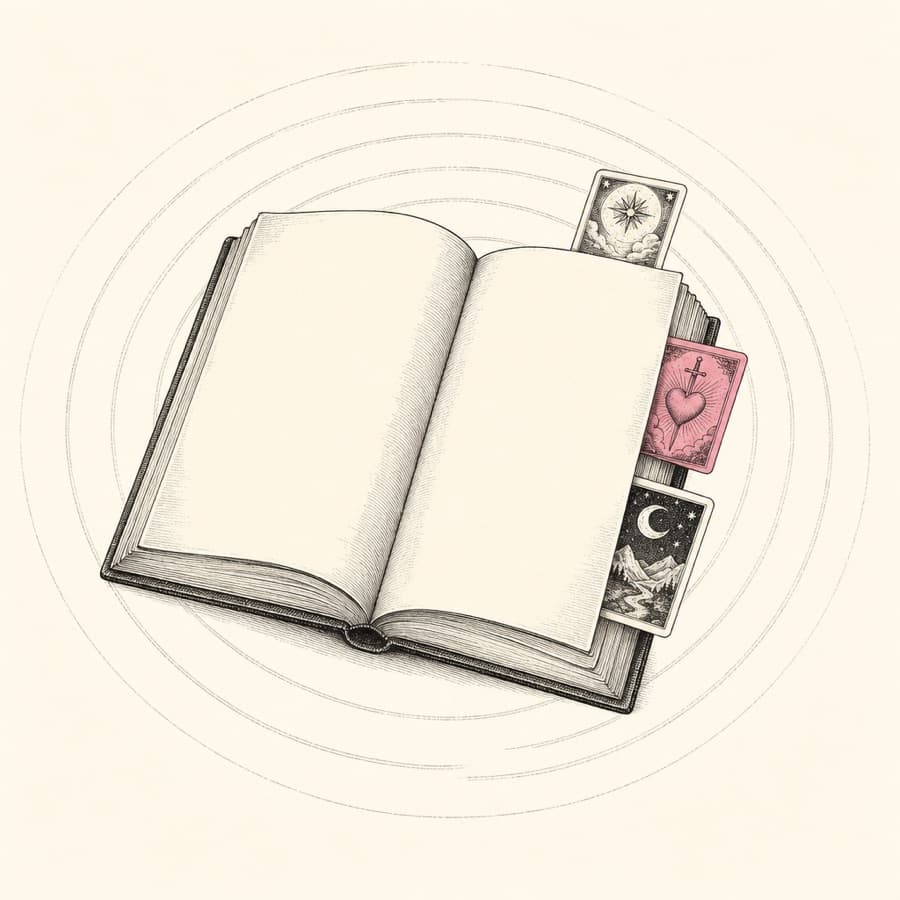
Your reading history can provide several kinds of context:
The questions you actually asked
The question and situation you shared can inform a later reading on the same subject. You can also keep a specific question open as a thread.
The people and places that recur
People and places you mention can connect related readings. That context comes from what you share in the app.
Cards you keep pulling
If the Five of Cups comes up several times, that repetition can become part of the reading. You can consider it alongside what was happening each time. Each card page covers what that card can mean when it keeps showing up.
Your optional birth profile
If you add your birth chart or Human Design profile, they can provide context for your readings. You can change these preferences or read with just the cards.
Your Your Story page brings together recurring themes, people, card patterns, and the threads you keep open.
Keep a question open on purpose
Some questions do not resolve in one sitting. Threads are how you and your reader agree to hold one of them together.
When a reading ends, you may be offered a single sentence - a distillation of what is still unsettled:
After a reading
You're weighing whether this corporate job gives you real breathing room or costs you the ambition you still want to pursue.
Edit it until it sounds like you. The sentence is yours, not the app's - rewrite it freely before keeping it. Then choose Check in next week if you want a gentle nudge, or When something changes if you'd rather it simply wait.
A kept thread does not nag. It sits quietly until one of two things happens: life moves, or a later reading truly touches it.
When a reading picks the thread back up
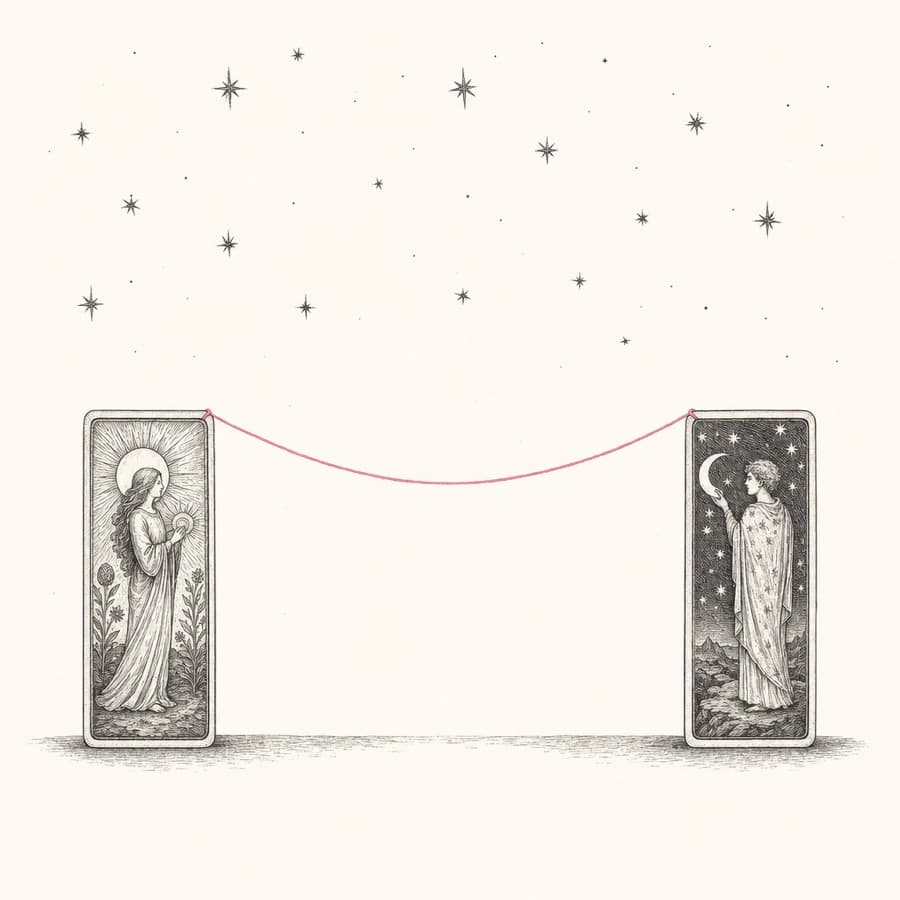
Weeks later you ask about something that seems unrelated - sleep, money, a mother, a move. If your open thread genuinely belongs in that reading, the reader weaves it in. And when it does, it says so out loud:
In a later reading
Continues a thread you left open - July 18
"You're weighing whether this corporate job gives you real breathing room..."Did this connection fit? Yes Not really
Three things to know about that rose-colored bar:
It is sourced, never vague. It appears only when the reading actually drew on your thread, and it always shows which one, from when. Tap it to revisit the source reading. No mysterious "as we discussed before..."
It is honest by design. If the connection was not really used, the bar does not appear - even if the topics rhyme. Your reader would rather stay quiet than fake continuity.
Your answer decides what happens next. Yes leaves the thread as it is. Not really rests that thread for 14 days before a reading can bring it up again, and after a second Not really readings stop bringing it up. The thread stays in your list either way, so you can still close it or cut it yourself.
What happened matters most
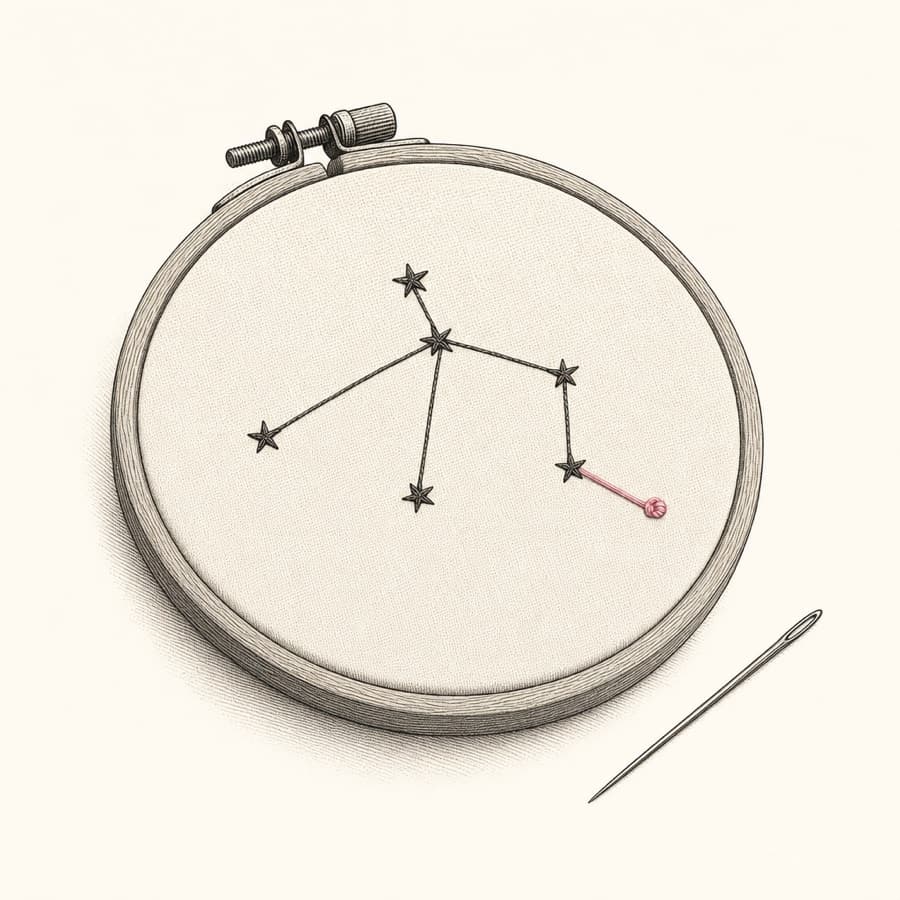
When a thread comes due - or whenever you feel like it - Home will offer a quiet check-in: Still open or Something happened.
If something happened, say what, in a sentence:
Closing a thread
Adding what happened gives a later reading more current context. If you come back to the same question, the outcome can be part of that reading.
Closed threads stay visible in Your Story, with their endings. You can return to what you were deciding and what happened, in your own words.
Make room for useful context
Do
- Share a specific situationwhen you want a more personal reading. A simple daily pull is fine, too.
- Use consistent names for people or places you choose to mention. Share only what you’re comfortable keeping.
- Keep a question open if you want to return to it. There’s no required number of threads.
- Close threads when life moves. One sentence about what happened adds context for later readings.
- Answer Did this connection fit? honestly - including "Not really."
Skip
- Keeping a thread out of politeness. Not now is always fine; you'll be offered another at the right moment.
- Opening near-duplicate threads for the same dilemma - edit the sentence instead, or let one carry it.
- Treating check-ins as deadlines. "Still open" is a perfectly good answer, every time.
- Writing outcomes for an audience. One honest line beats a paragraph of hedging.
Choose what to forget
You can change what carries into future readings:
Any reading can be forgotten. Choose Don't remember this reading and it stays in your history but will never inform another reading.
Any thread can be cut. Press and hold a thread in Your Story to forget it entirely - source, callbacks, and all.
Nothing is shared. Your memory is yours alone. Friends see what you choose to share, never what your reader remembers.