I want to try a pottery class, but I keep putting it off.
You’re allowed to be a beginner.
The Fool leaves room to learn as you go. What would make it easier to show up and try, even if the first thing you make is a little wonky?
tarot~ink8 September
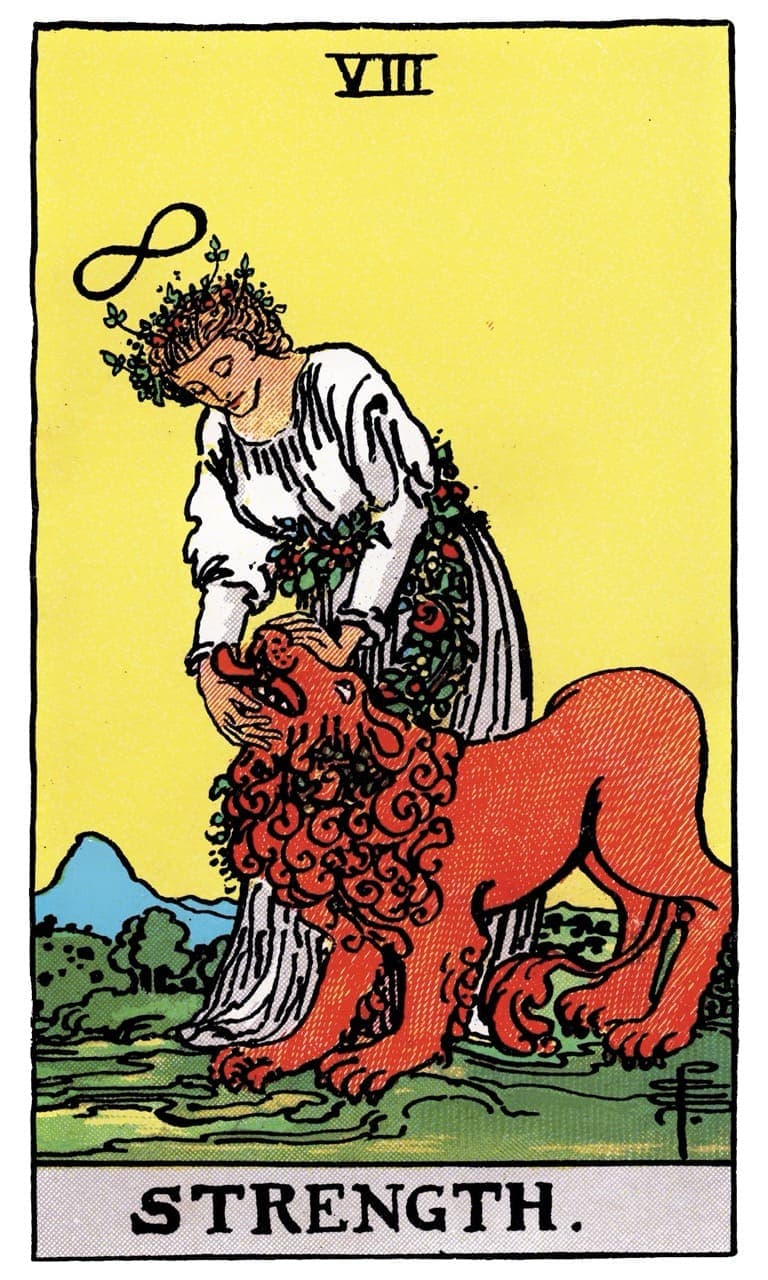
Strength
I booked the pottery class. Now I want to cancel.
You booked it. That counts.
You were waiting to feel ready for that pottery class. Booking it changed the question: what would help you go, even with the nerves?
An illustrative example. Readings in the app are written by AI.
The cards you come back to
Start with a classic. Make it your own.
The original deck is ready for your first reading. When you want something more personal, choose a style or bring a reference image and create your own cards. Read with them as you go.
The High PriestessThe FoolThe Sun
The original deck, included in tarot~ink.
Your own cards can join it.
Your cards, ready for a reading.
On your table, too
Keep your favourite deck.
Shuffle by hand. Lay out your spread. Take a photo to bring those cards into a reading, with the same history and follow-up questions.
At your own pace
Some days, one card is enough.
A quick pull to start the day. A longer reading when there’s more on your mind.
See how the cards connect.
Look up upright and reversed meanings, then ask how the cards in your spread relate to one another. All 78 cards also have their own page here, with love, work and advice meanings.
No. Start with a question or a simple daily pull. Each reading explains the cards in relation to what you’ve shared, and you can ask follow-up questions. You don’t need to memorise the deck.
How are the readings written?
Readings are written by AI from your cards, what you share, and relevant context from your earlier readings. You can also add astrology and Human Design. The readings offer questions and perspectives for reflection; they don’t predict what will happen.
What carries over between readings?
Your earlier questions, recurring cards, and themes can inform later readings. You can deliberately keep a question open as a thread. When a reading returns to that thread, it points back to the source, and you decide whether the connection fits. You can close or forget a thread, or leave a reading out of future memory.
Can I make it forget a reading?
Yes. Choose “Don’t remember this reading” from a reading’s menu. The reading stays in your history, and later readings stop drawing on it. In Your Story, press and hold a thread to forget it. Deleting your account from Profile removes your readings and everything kept from them.
Are my readings private?
Yes. Your readings are stored in Frankfurt, Germany, and adding a friend doesn’t share them. Nothing is sold or used for advertising. To write a reading, your question, your cards and the relevant history are sent to OpenAI, which doesn’t train on them. The Privacy Policy lists every service involved.
Can I use my physical cards?
Yes. Photograph your spread, check the identified cards and their orientation, and continue with a reading in the app. Scanning is in beta, so you may need to correct a card before continuing.
Can I make my own tarot deck?
Yes. Start with the original deck and create cards one at a time from a style you choose and, if you like, a reference image. Your cards can be used in readings alongside the original artwork, so you don’t need all 78 before you start.
What does a reversed card mean?
A reversed card is one that comes up upside down. Most readers take it as the card’s meaning held back, turned inward, or still forming, rather than its opposite. tarot~ink keeps each card’s orientation, from the daily pull to a scanned spread, and the reading takes it into account.
How is this different from a paper tarot journal?
A paper journal holds what you write, and linking entries is up to you. tarot~ink keeps each reading with its question and cards, shows which cards keep coming up, and lets a new reading build on an earlier one with a dated note pointing back to it. There are no free-form notes in the app, so if you like writing by hand, a paper journal still fits alongside it.
When can I try it, and what will it cost?
tarot~ink is in closed beta for iOS and Android. Join the waitlist for an email when access opens. Your first reading is free. Final pricing and paid features will be shared before public launch.
Bring what’s on your mind.
Join the waitlist. We’ll email you when tarot~ink opens, so you can start with a free reading.